Legal Aid & Consumer Protections: Safeguarding Against Predatory Loans
In a financial landscape often fraught with hidden traps, understanding your rights and access to legal aid is paramount. This guide illuminates the critical role of consumer protection against predatory loans, offering actionable insights and empowering you to reclaim financial stability.

Predatory lending practices can devastate individuals and families, trapping them in cycles of escalating debt with exorbitant interest rates and unfair terms. From payday loans to title loans and certain installment loans, these schemes target vulnerable populations, stripping away their hard-earned assets and peace of mind. But there’s good news: a robust framework of legal aid and consumer protection exists to help you fight back.
Table of Contents
Consumer Law Organizations and Advocates
When facing the complexities of predatory lending, you don’t have to navigate the legal system alone. Numerous organizations are dedicated to providing vital consumer protection against predatory loans, offering free or low-cost legal assistance and advocacy.

Who Can Help You?
- Legal Aid Societies: These non-profit organizations provide free legal services to low-income individuals. They often have specialists in consumer law and debt defense.
- National Consumer Law Center (NCLC): While NCLC primarily supports other attorneys and advocates, their website is an invaluable resource for understanding consumer rights and identifying state-specific laws.
- Consumer Financial Protection Bureau (CFPB): A U.S. government agency dedicated to making consumer financial markets work by regularly publishing resources and accepting complaints.
- State Attorneys General: Your state’s Attorney General office often has a consumer protection division that can investigate complaints and sometimes take legal action on behalf of consumers.
- Non-profit Credit Counseling Agencies: While not legal aid, these agencies can help with debt management plans and financial education, sometimes identifying predatory terms.
Stat Callout:
According to the National Consumer Law Center, an estimated 12 million Americans use payday loans annually, often falling into debt traps due to their extremely high interest rates, averaging nearly 400% APR nationally. (NCLC, 2023)
Action Checklist: Finding the Right Advocate
- Identify Your Need: Are you seeking advice, representation, or complaint filing?
- Research Local Resources: Search for “Legal Aid [Your City/State]” or “Consumer Protection Attorney [Your State]”.
- Contact Agencies: Reach out to multiple organizations to understand their services and eligibility requirements.
- Prepare Your Documents: Gather all loan agreements, payment records, and communication with the lender.
- Ask About Costs: Clarify any potential fees, though many consumer law organizations offer pro bono or sliding-scale services.
Legal Remedies for Unfair Lending Practices
Federal and state laws provide significant legal pathways to challenge and reverse the damage caused by predatory lenders. Understanding these remedies is a crucial step in ensuring consumer protection predatory loans.
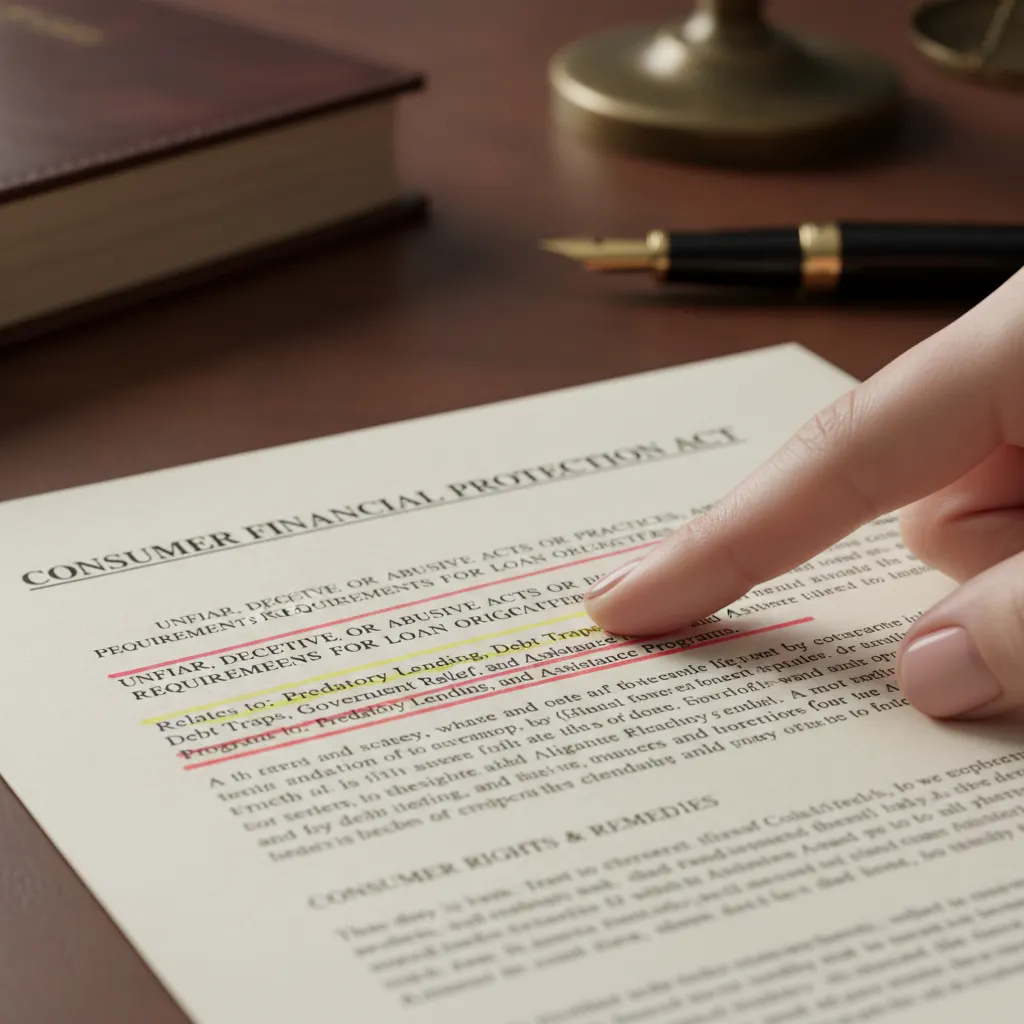
Understanding Key Consumer Protection Laws
- Truth in Lending Act (TILA): Requires lenders to disclose loan terms, including the annual percentage rate (APR) and total cost of credit, clearly and accurately. Violations can lead to loan rescission or damages.
- Fair Debt Collection Practices Act (FDCPA): Protects consumers from abusive, deceptive, and unfair debt collection practices by third-party collectors.
- Equal Credit Opportunity Act (ECOA): Prohibits discrimination in credit transactions based on race, color, religion, national origin, sex, marital status, or age.
- State Usury Laws: Many states have laws capping the maximum interest rates lenders can charge. Predatory loans often violate these caps.
- Unfair, Deceptive, or Abusive Acts or Practices (UDAAP): Enforced by the CFPB and FTC, this broad category covers a wide range of harmful lending behaviors not explicitly outlawed by other statutes.
“Knowledge of consumer law is the first line of defense against financial exploitation. Don’t let fear prevent you from asserting your rights.” – Legal Aid Attorney
Step-by-Step: How to Pursue Legal Action
- Review Your Documents: Carefully examine your loan agreement for any clauses that seem unfair, excessive, or unclear. Look for hidden fees, high interest rates, or unusual payment schedules.
- Document Everything: Keep a meticulous record of all communications with the lender, payment history, and any threats or harassment received.
- Seek Legal Counsel: Consult with a consumer law attorney or legal aid organization. They can assess your case, identify violations, and advise on the best course of action.
- Send a Demand Letter: Your attorney may send a letter to the lender detailing violations and demanding specific remedies (e.g., loan cancellation, refund of fees).
- Negotiate or Litigate: If a resolution isn’t reached, your lawyer might negotiate a settlement or file a lawsuit in court. Remedies can include loan modification, cancellation, monetary damages, or even class action participation.
Reporting Predatory Lenders to Authorities
Reporting predatory lenders is crucial not only for your own potential relief but also for protecting other consumers. Your complaint contributes to regulatory oversight and enforcement efforts, strengthening consumer protection predatory loans.

Gathering Your Evidence
Before filing a complaint, ensure you have gathered all relevant information:
- The lender’s name, address, and contact information.
- Details of the loan (date, amount, interest rate, terms).
- Copies of all loan documents, contracts, and payment records.
- Dates and summaries of communications with the lender (phone calls, emails, letters).
- Any evidence of unfair, deceptive, or abusive practices.
Step-by-Step: Filing a Complaint
- Identify the Right Agency:
- Consumer Financial Protection Bureau (CFPB): Ideal for complaints about banks, credit unions, mortgage companies, and non-bank financial companies like payday lenders. File a complaint with the CFPB.
- Federal Trade Commission (FTC): Addresses fraud, identity theft, and unfair business practices across various industries. File a complaint with the FTC.
- State Attorney General: Your state’s office can investigate and take action against businesses that violate state consumer protection laws. Search for “[Your State] Attorney General Consumer Complaint.”
- Better Business Bureau (BBB): While not a regulatory agency, the BBB can help mediate disputes and provides a public record of business practices.
- Complete the Complaint Form: Provide accurate and detailed information. Clearly describe the problem, including dates, names, and specific actions.
- Attach Supporting Documents: Upload copies of all relevant evidence gathered in the previous step. Do not send originals.
- Follow Up: Keep a record of your complaint number and follow any instructions provided by the agency for follow-up.
- Consider Legal Advice: Even after filing a complaint, consulting an attorney can help ensure your rights are fully protected and explore additional legal avenues.
Statute of Limitations on Debt Collection
Understanding the statute of limitations (SOL) on debt collection is vital when dealing with old debts, especially those stemming from predatory loans. This legal timeframe dictates how long a creditor or collector has to sue you to collect a debt.
- Varies by State: The SOL for debt varies significantly by state and also by the type of debt (e.g., written contracts, oral contracts, promissory notes). It can range from 3 to 10 years.
- Restarting the Clock: Be extremely cautious. Making even a small payment, acknowledging the debt, or promising to pay an old debt can “restart the clock” on the statute of limitations, giving collectors a new window to sue you.
- Time-Barred Debt: If the SOL has expired, the debt is considered “time-barred.” A debt collector cannot sue you for a time-barred debt, though they may still be able to contact you to try and collect it.
Always verify the SOL for your specific debt and state. If you are contacted about an old debt, seek legal advice before making any payments or acknowledgments.
Your Power to Fight Back
Navigating the aftermath of predatory lending can feel overwhelming, but remember that you are not powerless. With the right legal aid, a clear understanding of your consumer protections, and the courage to report unfair practices, you can challenge predatory loans and move towards a more secure financial future. Empower yourself with knowledge, connect with advocates, and stand up for your rights.
Frequently Asked Questions
What qualifies a loan as “predatory”?
A loan is often considered predatory if it involves unfair, deceptive, or abusive lending practices that benefit the lender while harming the borrower. Common characteristics include excessively high interest rates, hidden fees, misleading terms, aggressive sales tactics, or loan flipping (repeated refinancing that strips equity).
Can I get out of a predatory loan agreement?
Potentially, yes. Depending on the specific predatory practices involved and applicable federal and state laws (like TILA or state usury laws), you might be able to rescind the loan, renegotiate terms, or receive monetary damages. Consulting with a consumer law attorney or legal aid service is crucial to evaluate your options.
Is it too late to report a predatory lender if the loan was years ago?
It depends on the specific violation and the statute of limitations for filing complaints or pursuing legal action. While some time limits are strict, certain ongoing violations or newly discovered fraud might extend these periods. It’s always best to consult with a legal professional, as they can assess your specific situation and advise on the viability of a claim.
What’s the difference between legal aid and a private attorney?
Legal aid organizations typically provide free or low-cost legal services to individuals who meet certain income criteria. Private attorneys charge fees, which can sometimes be recovered from the predatory lender if you win your case. Both offer legal expertise, but legal aid focuses on ensuring access to justice for underserved communities.
Will reporting a lender affect my credit score?
Generally, filing a complaint against a predatory lender with regulatory bodies like the CFPB or FTC will not directly impact your credit score. However, if the underlying predatory loan or associated debt is already negatively reported on your credit, resolving the issue could eventually lead to corrections or improvements in your credit history.
References & Sources
- Consumer Financial Protection Bureau (CFPB). (2023). How the CFPB Protects Consumers. Retrieved from consumerfinance.gov/about-us/
- Federal Trade Commission (FTC). (2023). Consumer Protection. Retrieved from ftc.gov/news-events/topics/consumer-protection
- National Consumer Law Center (NCLC). (2023). Predatory Lending & Debt Traps. Retrieved from nclc.org/issues/predatory-lending/
- Legal Services Corporation (LSC). (2023). Finding Legal Aid. Retrieved from lsc.gov/find-legal-help
- American Bar Association (ABA). (2023). Understanding Statutes of Limitations. Retrieved from americanbar.org/groups/public_education/resources/law_questions_answers/statute_limitations/