WINZ vs. Private Payday Loans: Navigating Urgent Financial Needs in New Zealand
Facing unexpected expenses or a financial shortfall can be incredibly stressful. In New Zealand, when you’re in a tight spot, two common avenues often come to mind: seeking assistance from Work and Income NZ (WINZ) or considering a private payday loan. But which path is right for you, and what are the crucial differences?
Understanding the distinctions between WINZ vs payday loans is vital for your financial well-being. This comprehensive guide will break down the pros, cons, and critical considerations for each, helping you make an informed decision that prioritises your long-term financial health.
Table of Contents
- Comparing Government Support and Private Lending
- Understanding WINZ Assistance: Your Government Safety Net
- The Perils of Private Payday Loans: A Costly Convenience
- Making Informed Financial Decisions in New Zealand
- Prioritising Long-Term Financial Well-being
- Frequently Asked Questions
- References / Sources
Comparing Government Support and Private Lending
When immediate funds are needed, the choice between government assistance and private lending can seem straightforward on the surface – one offers a quick fix, the other a safety net. However, the underlying mechanisms, costs, and long-term implications vary dramatically.
WINZ, a government agency, provides various forms of support designed to help New Zealanders meet their essential needs and improve their well-being. Private payday loans, conversely, are offered by non-bank lenders and are typically small, short-term loans with extremely high-interest rates, intended to be repaid on your next payday.

| Feature | Work and Income NZ (WINZ) | Private Payday Loans |
|---|---|---|
| Purpose | Essential living costs, emergency relief, long-term support. | Short-term cash flow, immediate small expenses. |
| Cost/Interest | Often interest-free advances or non-repayable grants. | Extremely high-interest rates (often 300%+ APR), significant fees. |
| Eligibility | Needs-based, income and asset tested, residency requirements. | Proof of income, often less stringent credit checks. |
| Application Process | Can be comprehensive, requires documentation, may take time. | Typically fast and online, minimal documentation. |
| Repayment | Managed deductions from benefit/wages, flexible options. | Lump sum on next payday, direct debit from bank account. |
| Long-term Impact | Aims to support stability, often includes budgeting advice. | High risk of debt cycle, negative credit impact if not repaid. |
Stat Callout:
Reports indicate that the typical annual interest rate (APR) for payday loans in New Zealand can range from 100% to over 500%, far exceeding conventional lending products.
Understanding WINZ Assistance: Your Government Safety Net
Work and Income NZ is a critical part of New Zealand’s social welfare system, designed to provide financial and practical support to those who need it most. They offer a range of payments, from regular benefits to one-off emergency grants and recoverable advances.
Key Benefits of WINZ Assistance:
- Interest-Free Support: Many payments, especially advances, are interest-free, meaning you only repay what you borrow. Grants do not need to be repaid at all.
- Tailored Solutions: WINZ caseworkers assess your specific situation and can often provide a combination of support, including grants for essential items (like food, medical costs) and recoverable advances for larger expenses (like bond, whiteware).
- Budgeting and Advice: Alongside financial aid, WINZ can connect you with budgeting services and financial advisors, helping you manage your money effectively and build long-term stability.
- Flexible Repayment: Repayment plans for advances are typically manageable, deducted directly from your benefit or wages at an affordable rate.
- Non-Profit Motive: Unlike private lenders, WINZ’s primary goal is social support, not profit.
“WINZ is designed to be a supportive hand during difficult times, offering not just money but also pathways to greater financial independence. It’s often the safest and most sustainable option for urgent financial needs.”

Stat Callout:
In 2023, Work and Income provided assistance to hundreds of thousands of New Zealanders, demonstrating its significant role as a vital social safety net across the country.
The Perils of Private Payday Loans: A Costly Convenience
While the speed and ease of access to private payday loans can be tempting, particularly when you’re desperate, they come with substantial risks that can quickly spiral into a deeper debt crisis. They are marketed as a quick fix, but often become a long-term problem.
Risks of High-Interest Payday Loans:
- Exorbitant Interest Rates: As highlighted, the Annual Percentage Rate (APR) on payday loans is astronomically high. A small loan can quickly double or triple in repayment amount.
- Debt Cycle Trap: Many borrowers find they cannot repay the full loan on their next payday, leading them to ‘roll over’ the loan, incurring more fees and interest, or take out another loan to cover the first. This creates a vicious cycle.
- Hidden Fees: Beyond interest, payday lenders may charge establishment fees, late payment fees, and default fees, significantly increasing the total cost.
- Negative Credit Impact: Defaulting on a payday loan can severely damage your credit score, making it harder to secure future loans, mortgages, or even utility contracts.
- Aggressive Collection Practices: Some lenders employ aggressive tactics if you fall behind on payments, adding to stress and financial pressure.
For many, the initial relief a payday loan offers is short-lived, replaced by immense stress and financial hardship due to unmanageable repayments. It’s crucial to understand these dangers before you even consider applying.

Stat Callout:
Research by consumer advocacy groups in NZ has shown that a significant percentage of payday loan borrowers end up taking out multiple loans or extending existing ones, indicative of the debt trap.
Making Informed Financial Decisions in New Zealand
Navigating financial difficulties requires careful thought and a clear understanding of your options. The decision between WINZ vs payday loans should always lean towards the most sustainable and least costly solution for your unique circumstances.
Your Action Checklist for Financial Needs:
- 1. Assess Your True Need: Distinguish between wants and essential needs. Can any expense be delayed or reduced?
- 2. Contact WINZ First: Even if you think you’re not eligible, speak to WINZ. They have a wide range of support options you might not be aware of. The worst they can say is no.
- 3. Explore Alternatives: Consider asking family/friends, checking community welfare organisations, or using local budgeting services.
- 4. Understand All Terms: If you *must* consider private lending, read every line of the contract, especially the fine print regarding interest rates, fees, and repayment schedules. Don’t be rushed.
- 5. Budgeting & Financial Advice: Seek free budgeting advice from organisations like the MoneyTalks helpline or Christians Against Poverty (CAP).
- 6. Protect Your Credit: Be mindful of how borrowing affects your credit rating. WINZ assistance typically does not impact your credit score negatively, whereas defaulting on private loans can.
Remember, quick cash often comes with a very high price tag. Prioritising long-term financial stability over immediate, expensive fixes is always the wiser choice.
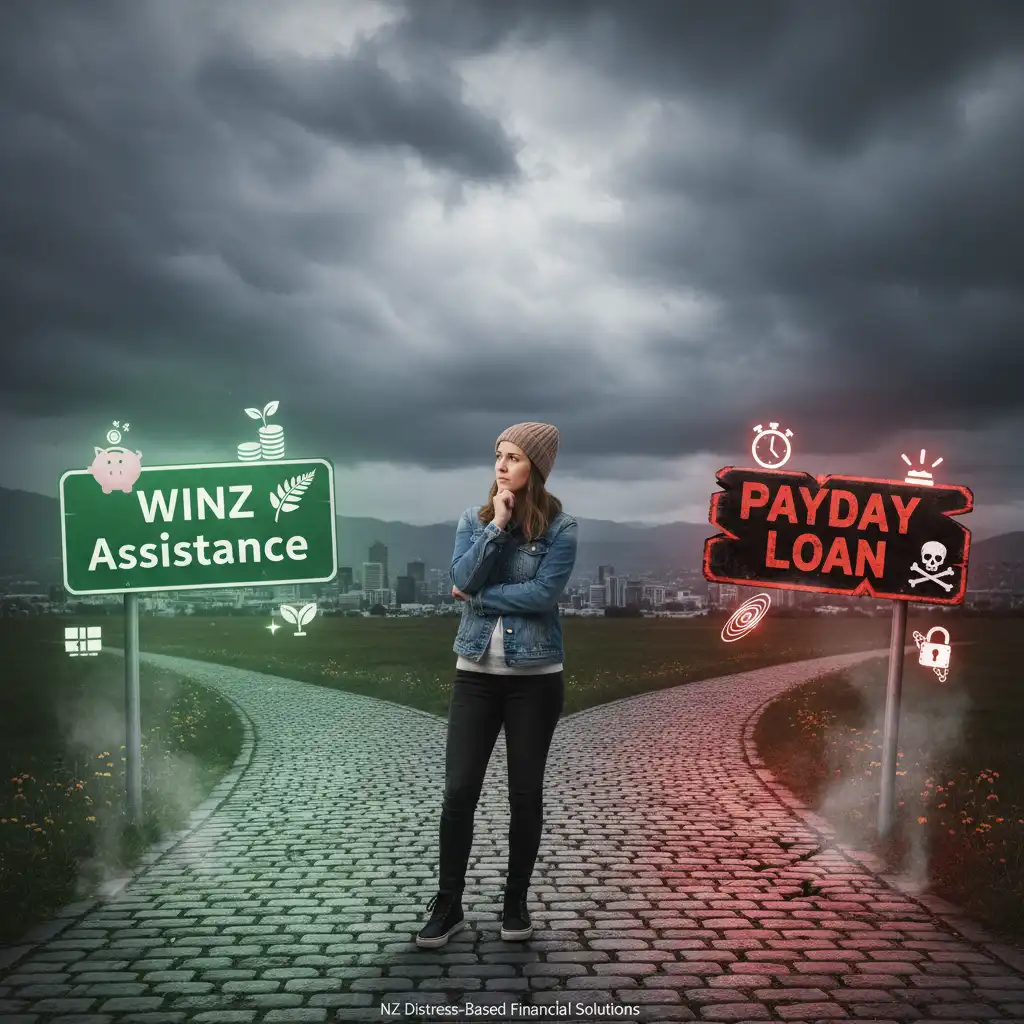
Prioritising Long-Term Financial Well-being
The contrast between WINZ vs payday loans could not be starker. One is a government-funded system built on support and rehabilitation, often interest-free, designed to help you regain control. The other is a commercial product driven by profit, offering rapid access to cash at an exorbitant cost, with a high potential to worsen your financial situation.
When urgent financial needs arise, take a moment to breathe and assess. Your first port of call in New Zealand should almost always be Work and Income NZ. Explore all avenues for help before resorting to high-interest private lenders. Your future self will thank you for making a responsible, informed decision.

Frequently Asked Questions
What exactly is WINZ, and how can they help me?
WINZ (Work and Income New Zealand) is a government department that provides financial assistance and support services to New Zealanders. They offer various payments, including regular benefits, emergency grants for essential costs (like food, medical needs, or accommodation), and recoverable advances for larger one-off expenses (like bond or whiteware). Many of these are interest-free.
What makes private payday loans so risky in New Zealand?
Payday loans are risky due to their extremely high-interest rates (often hundreds of percent APR), short repayment terms, and significant fees. They are designed for quick repayment, and if you can’t meet the deadline, you can quickly fall into a debt cycle, taking out new loans to pay off old ones, incurring more costs and damaging your financial health.
Can I get both WINZ assistance and a payday loan simultaneously?
While there’s no legal barrier to applying for both, it’s strongly discouraged. If WINZ determines you are eligible for assistance, their support is almost always a more financially sound and sustainable option. Taking a payday loan while receiving WINZ support could complicate your financial situation and lead to unmanageable debt.
Are there any alternatives to WINZ or payday loans for urgent financial help?
Yes, several! Consider reaching out to family or friends, contacting a community budgeting service (like MoneyTalks or local Citizens Advice Bureaux), or exploring local food banks and welfare organisations. Some utility providers also offer hardship programs or payment plans. Always explore these less costly options before resorting to high-interest loans.
How do I apply for WINZ assistance?
You can apply for WINZ assistance online through their website (workandincome.govt.nz), by calling their contact centre, or by visiting a local service centre. You will typically need to provide documentation regarding your income, assets, expenses, and proof of identity. It’s recommended to gather all necessary documents before applying to speed up the process.
References / Sources
- Work and Income New Zealand (WINZ) Official Website: www.workandincome.govt.nz
- Commerce Commission New Zealand – Responsible Lending Code: www.comcom.govt.nz
- MoneyTalks – Financial Mentoring Service: www.moneytalks.co.nz
- Citizens Advice Bureau New Zealand: www.cab.org.nz
- FinCap (National Building Financial Capability Charitable Trust) – Research on High-Cost Lending: www.fincap.org.nz