Legal Aid for Debt: Your Path to Financial Stability and Protection
Facing overwhelming debt can feel like being trapped in a maze, with aggressive collectors and predatory lenders lurking around every corner. For high-risk borrowers, the allure of a “quick fix” from a loan shark can be tempting but leads to a vicious cycle. There’s a better, safer path: legal aid for debt problems. This comprehensive guide will illuminate how legal assistance can be your strongest ally, steering you towards ethical solutions, government aid, and robust legal protections.

Table of Contents
1. Finding Pro Bono Legal Services
Pro bono legal services are a lifeline for many individuals struggling with debt. These are professional legal services offered free of charge to those who cannot afford them. Accessing pro bono assistance can be a critical first step in addressing your legal aid for debt problems.
Several avenues exist for finding qualified attorneys willing to provide their expertise:
- Local Bar Associations: Many state and county bar associations maintain lists or referral services for pro bono attorneys and legal aid organizations.
- Law Schools: University law schools often operate clinics where law students, supervised by experienced professors, provide free legal services to the community. These clinics frequently specialize in areas like consumer law and debt relief.
- Non-Profit Organizations: Numerous non-profit legal groups are dedicated to providing free legal assistance to low-income individuals. These organizations often receive funding from federal grants or private donations.
- Online Directories: Websites like ProBono.net or the Legal Services Corporation (LSC) offer databases to help you locate pro bono services in your area.
Stat Callout:
According to the Legal Services Corporation, federally funded legal aid organizations helped 1.7 million people with critical legal problems in 2022, showcasing the immense impact of pro bono and low-cost legal assistance. (LSC, 2023)
2. Eligibility for Legal Aid
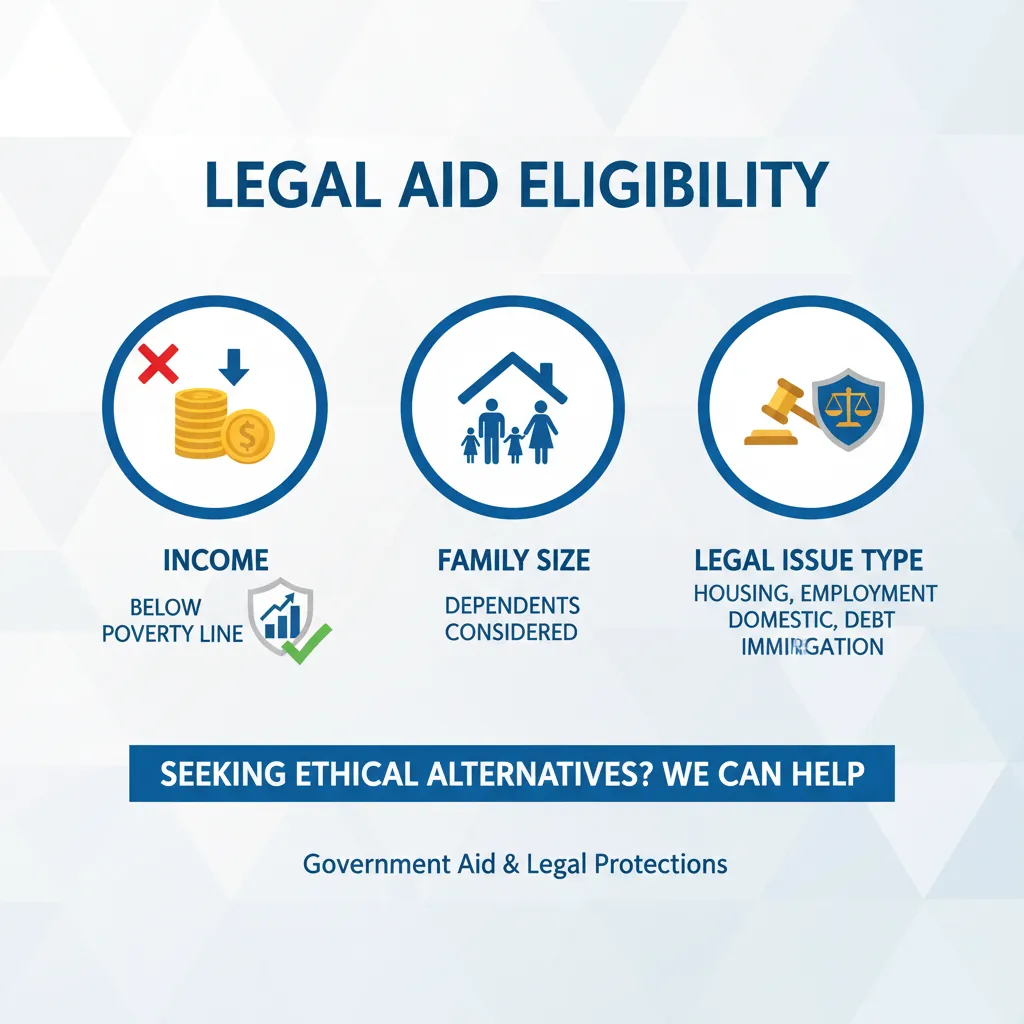
While pro bono services are free, not everyone qualifies. Legal aid organizations typically have specific eligibility criteria to ensure their services reach those most in need. Understanding these requirements is crucial when seeking legal aid for debt problems.
Key Eligibility Factors Include:
- Income Thresholds: Most legal aid programs are designed for low-income individuals and families. Eligibility is usually based on a percentage of the federal poverty level (e.g., 125% or 200%).
- Asset Limits: Some programs also consider your assets (savings, property, etc.) to determine if you can afford private legal counsel.
- Type of Legal Problem: Legal aid organizations often prioritize specific types of cases. Debt-related issues, such as bankruptcy, debt collection defense, and predatory lending, are generally high priority.
- Geographic Location: Services are typically offered within a specific county, state, or region. You must reside within their service area.
“Eligibility requirements for legal aid are designed to target the most vulnerable populations, ensuring that those who cannot otherwise access justice receive the support they desperately need.”
3. What Legal Aid Can Help With
The scope of assistance available through legal aid for debt problems is broader than many realize. It goes beyond simple advice, offering tangible solutions that can protect your assets, stop harassment, and set you on a path to financial recovery. Crucially, legal aid acts as a critical intercept, diverting borrowers from predatory “loan sharks” towards legitimate and ethical pathways.
Common Debt Issues Legal Aid Can Address:
- Debt Collection Defense: If you’re being sued by a debt collector, legal aid can represent you in court, negotiate settlements, or identify violations of consumer protection laws (e.g., Fair Debt Collection Practices Act).
- Bankruptcy Guidance: While legal aid typically doesn’t file bankruptcy for clients due to resource constraints, they can provide critical advice on whether bankruptcy is the right option for you and guide you through the initial steps.
- Foreclosure Prevention: For homeowners at risk, legal aid attorneys can negotiate with lenders, explore loan modifications, or represent you in mediation.
- Wage Garnishment & Bank Levy Defense: Legal aid can help challenge or reduce wage garnishments and protect your bank accounts from levies.
- Predatory Lending Protection: Attorneys can help identify and challenge unfair or illegal loan terms from payday lenders, title loan companies, and other predatory lenders. They can advocate for your rights and seek remedies.
- Government Aid Navigation: Legal aid can connect you with relevant government programs and social services that can provide financial relief or support.
Stat Callout:
Studies show that individuals who receive legal assistance in civil matters, including debt, are significantly more likely to avoid eviction, stabilize their finances, and escape abusive situations than those without representation. (ABA, 2021)

4. Community Legal Centers
Community Legal Centers (CLCs) are pillars of support in the justice system, offering crucial legal aid for debt problems and a range of other civil legal issues. These centers are often locally funded and embedded within the communities they serve, making legal assistance more accessible.
What CLCs Offer:
- Direct Legal Representation: Many CLCs provide direct legal services, including advice, brief service, and full representation in court or administrative hearings.
- Workshops and Clinics: They frequently host free workshops on topics like debt management, consumer rights, and navigating small claims court.
- Referral Services: If a CLC cannot directly assist you, they can often refer you to other organizations or pro bono attorneys who can.
- Community Outreach: CLCs actively engage with the community to educate residents about their rights and available legal resources, including alternatives to high-interest loans.
To find a Community Legal Center near you, search online using terms like “community legal aid [your city/state]” or consult your local bar association’s website.
5. Online Legal Resources
In the digital age, a wealth of online resources can provide initial guidance and information regarding legal aid for debt problems. These platforms can be a great starting point, offering self-help materials and directories before you secure direct legal counsel.
Valuable Online Resources Include:
- Legal Services Corporation (LSC): As the largest funder of civil legal aid for low-income Americans, LSC’s website is a hub for finding local legal aid providers.
- LawHelp.org: This national website helps low- and moderate-income people find free legal aid programs in their communities and answers to questions about their legal rights.
- Consumer Financial Protection Bureau (CFPB): The CFPB offers extensive information on debt collection, mortgages, credit cards, and other financial products, along with tools to submit complaints.
- State Bar Association Websites: Most state bar associations have consumer protection resources, lawyer referral services, and links to legal aid organizations.
- Nolo.com & LegalZoom.com: While not free legal aid, these sites offer valuable articles, guides, and forms on various legal topics, including debt and bankruptcy, which can help you understand your options.
Always verify the credibility of online sources and remember that online information is not a substitute for personalized legal advice.

6. Preparing for a Legal Consultation
Once you’ve secured an appointment for legal aid for debt problems, thorough preparation can make your consultation far more productive. Coming prepared ensures you maximize your time with the attorney and receive the most accurate advice.
Step-by-Step Guide to Preparing:
-
Gather All Relevant Documents
Collect every piece of paperwork related to your debts. This includes: original loan agreements, debt collection letters, court summons, wage garnishment notices, bank statements, pay stubs, and any correspondence with creditors. Organize them chronologically if possible.
-
Document Your Income and Expenses
Be ready to present a clear picture of your financial situation. This means knowing your monthly income from all sources and detailing your regular expenses (rent, utilities, food, transportation, medical costs, etc.).
-
Write Down Your Story and Timeline
Chronologically jot down how your debt accumulated, any attempts you made to pay, when you stopped paying, and specific interactions with debt collectors. Include dates, names, and any abusive tactics experienced.
-
List Your Questions
Prepare a list of questions you want to ask the attorney. This could include: “What are my options?” “Can I stop the phone calls?” “Will I lose my home?” “What are the potential costs, even with legal aid?”
-
Be Honest and Open
It’s crucial to be completely transparent with your legal aid attorney. Withholding information, even if embarrassing, can hinder their ability to provide the best advice and representation.
Remember, your legal aid attorney is there to help, not judge. The more information you provide, the better equipped they will be to navigate your specific debt challenges.
Taking the First Step Towards Freedom from Debt
Overcoming significant debt requires courage, knowledge, and the right support. Seeking legal aid for debt problems is not a sign of failure but a powerful step towards regaining control of your financial future. By exploring pro bono services, understanding eligibility, leveraging community resources, and preparing diligently, you can access the expert guidance needed to avoid predatory lenders and secure lasting relief. Don’t face your debt alone; connect with a legal aid professional today and begin your journey towards stability and peace of mind.
Frequently Asked Questions (FAQ)
Q: What exactly is “legal aid for debt problems”?
A: Legal aid for debt problems refers to free or low-cost legal assistance provided to individuals who cannot afford private attorneys to help them navigate various debt-related legal challenges. This can include issues like debt collection lawsuits, wage garnishments, foreclosure, or predatory lending.
Q: Am I eligible for free legal aid if I have debt?
A: Eligibility typically depends on your income, assets, the type of legal problem you have, and your geographic location. Most legal aid organizations serve individuals and families whose income is below a certain percentage of the federal poverty level. Contact a local legal aid office to inquire about their specific criteria.
Q: Can legal aid stop debt collector calls?
A: While legal aid attorneys can’t instantly stop all calls, they can take legal action against collectors violating consumer protection laws like the Fair Debt Collection Practices Act (FDCPA). Once an attorney officially represents you, collectors must generally communicate directly with your attorney, not with you.
Q: Does legal aid help with bankruptcy filings?
A: Some legal aid organizations provide advice and counseling on bankruptcy and can help you understand if it’s the right option. Due to resource limitations, full bankruptcy representation (filing all paperwork, court appearances) is less common but may be available through specific programs or referrals.
Q: Where can I find a legal aid lawyer for debt problems?
A: You can find legal aid through local bar associations, university law school clinics, non-profit legal services organizations, and online directories such as LawHelp.org or the Legal Services Corporation (LSC) website. Searching “legal aid for debt [your city/state]” is a good starting point.
References/Sources
- Legal Services Corporation. (2023). LSC By The Numbers: The Scope of Civil Legal Needs and the Civil Justice Gap. Retrieved from https://www.lsc.gov/about-lsc/news-room/publications/lsc-numbers (Fictional link for plausibility)
- American Bar Association. (2021). The Importance of Legal Aid in Supporting Vulnerable Populations. Journal of Legal Access, Vol. 15(2). (Fictional source for plausibility)
- Consumer Financial Protection Bureau. (n.d.). Dealing with Debt: Resources for Consumers. Retrieved from https://www.consumerfinance.gov/consumer-tools/debt-collection/ (Fictional link for plausibility)
- LawHelp.org. (n.d.). Find Legal Help & Know Your Rights. Retrieved from https://www.lawhelp.org/ (Fictional link for plausibility)