Searching for a private loan sharks nz contact exposes borrowers to unregistered, illegal lenders operating outside the Credit Contracts and Consumer Finance Act (CCCFA). These predators charge interest rates exceeding legal caps, demand prohibited collateral like passports, and use intimidation. To protect your financial safety, avoid social media solicitations and utilize registered Tier 3 lenders or financial hardship services instead.
Financial desperation often drives New Zealanders to search for terms like “private loan sharks nz contact,” hoping for a quick solution to cash flow problems. However, the reality of the underground lending market in Aotearoa is far more dangerous than high interest rates alone. Engaging with unauthorized lenders can lead to a cycle of debt, harassment, and loss of personal assets without the protection of New Zealand law.
What is a Loan Shark in New Zealand?
In the context of New Zealand law, a loan shark is typically defined as a lender who lends money without being registered as a Financial Service Provider (FSP) or who operates in breach of the Credit Contracts and Consumer Finance Act 2003 (CCCFA). While the term is sometimes colloquially used to describe any high-interest lender, there is a distinct legal difference between a “high-cost” legal lender and a criminal loan shark.
Illegal loan sharks operate in the shadows. They do not perform credit checks, they do not provide compliant disclosure statements, and they rarely offer written contracts. Their business model relies on exploitation and fear rather than legal commerce.

How do you identify a loan shark?
If you are searching for a private lender because you have been declined by banks, you are at high risk of encountering a shark. Legitimate lenders must follow strict rules. If a potential lender exhibits any of the following behaviors, cease contact immediately.
1. Cash-Only Transactions
Legitimate lenders in New Zealand will transfer funds electronically to create a paper trail. Illegal sharks prefer cash to avoid detection by the Inland Revenue Department (IRD) and the police. If a lender insists on meeting you in a car park, at a park, or a private residence to hand over cash, they are likely operating illegally.
2. Holding Security Items (Passports and Cards)
One of the most aggressive tactics used by private loan sharks is holding a borrower’s passport, driver’s license, or bank card as “security.” This is illegal. Under the CCCFA, a lender cannot take possession of your travel documents or bank cards to secure a loan. If someone asks for your PIN number or your passport, they are not a lender; they are a predator.
3. Lack of Paperwork
Every legal loan in New Zealand requires a written contract that outlines:
- The amount borrowed.
- The annual interest rate.
- The total amount to be repaid.
- The fees and charges.
If a lender says, “Don’t worry about the paperwork, we know where you live,” this is a clear sign of a loan shark. Without a contract, they can—and often will—arbitrarily increase the amount you owe.
4. Intimidation and Harassment
Professional lenders use debt collection agencies and the courts to recover money. Loan sharks use text threats, physical intimidation, and public shaming. If you feel unsafe or threatened during the inquiry process, trust your instincts and walk away.
What is the difference between a Tier-3 lender and an illegal shark?
It is crucial to distinguish between “high-cost short-term lenders” (often called Tier-3 lenders) and actual illegal loan sharks. While Tier-3 lenders are expensive, they are regulated.

Tier-3 Lenders (Legal High-Cost Lenders)
These are registered companies (like payday lenders) that offer loans to people with poor credit. They are bound by the CCCFA, which means:
- Interest Rate Caps: Interest and fees cannot exceed 0.8% per day.
- Total Cost Cap: You never have to pay back more than 100% of the loan principal in interest and fees. For example, if you borrow $500, the most you can ever be asked to pay back is $1,000 (the original $500 + $500 in costs).
- Affordability Checks: They must check if you can afford the repayments without substantial hardship.
Illegal Loan Sharks
Illegal sharks ignore these caps entirely. They may charge 50% interest per week. They do not care about affordability because their collection method is intimidation. They are not registered on the Financial Service Providers Register (FSPR).
Geo-focus: Spotting Predatory Practices in Manurewa and Porirua
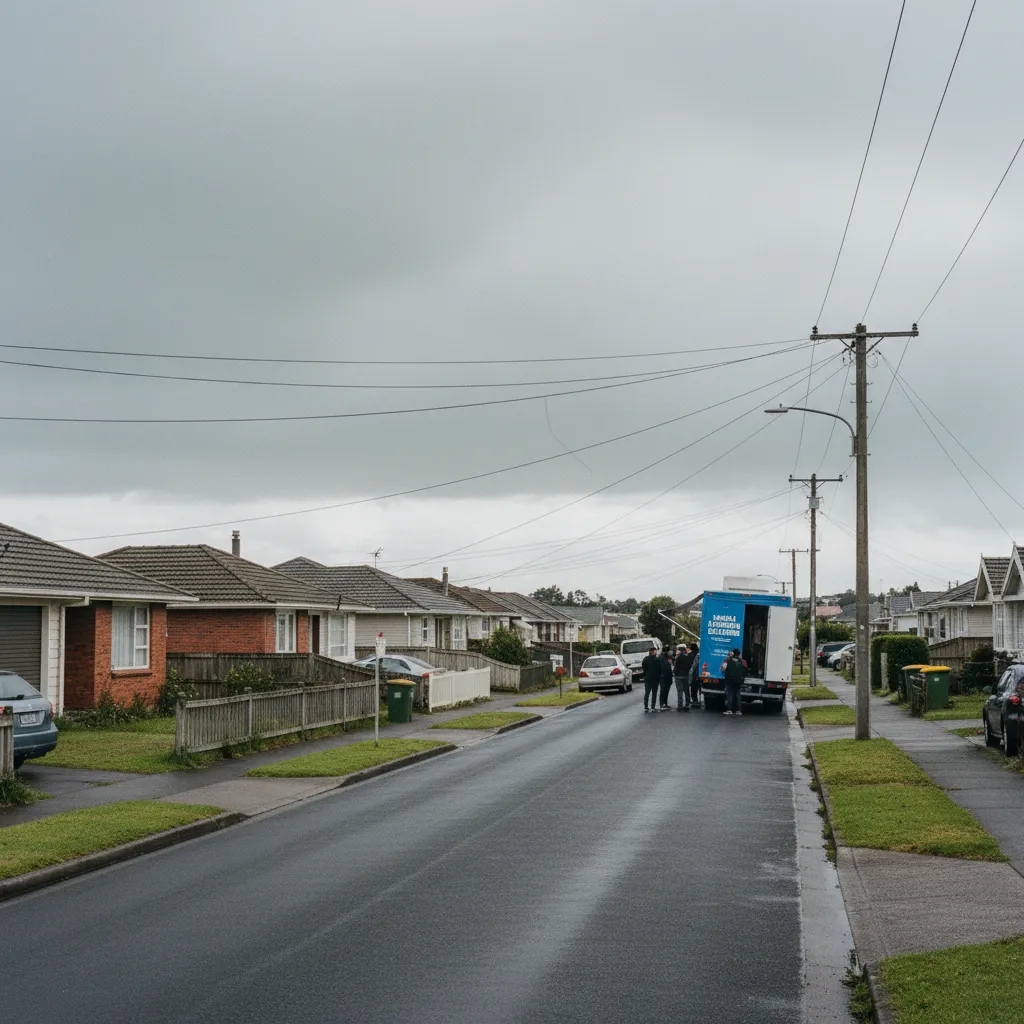
Certain communities in New Zealand are disproportionately targeted by illegal lenders. Areas like Manurewa in South Auckland and Porirua in Wellington have seen a rise in mobile lending trucks and unauthorized private lending circles.
The “Mobile Shop” Trap
While many mobile shops are legal businesses, some operate as fronts for predatory lending. They may offer goods on credit at exorbitant prices or offer cash loans “under the table” to customers who are already in debt to the shop. Community advocates in Manurewa have reported trucks targeting low-income streets, offering easy credit that traps families for years.
Community Word-of-Mouth
In tight-knit communities, loan sharks often operate via word-of-mouth. A “friend of a friend” who lends money might seem helpful initially, but because these agreements are informal, they can destroy relationships and community standing. In Porirua, budget services have noted cases where lenders use social pressure within church groups or sports clubs to enforce repayment of illegal debts.
Why you should avoid “contact numbers” found in comment sections
If you search for “private loan sharks nz contact” or “need cash now” on Facebook, Reddit, or community forums, you will likely encounter comments leaving WhatsApp numbers or Gmail addresses. Engaging with these contacts is one of the most dangerous financial moves you can make.
The “Advance Fee” Fraud
Many of these “private lenders” are actually scammers located overseas. They will promise you a loan of $5,000 but require an “insurance fee” or “setup fee” of $200 to be paid upfront via gift cards or crypto. Once you pay the fee, they block you. You never receive the loan, and you lose your $200.
Identity Theft
Other fake lenders use these advertisements to harvest your data. They will ask you to fill out a form with your driver’s license number, address, and bank details. They then use this information to commit identity fraud, opening accounts in your name or accessing your existing funds.
Digital Intimidation
If the lender is real but illegal, providing them with your social media details gives them leverage. If you miss a payment, they may threaten to message your family members, employer, or friends on your friends list to “out” you as a debtor. This is a common tactic known as “doxing” used by digital loan sharks.
Safe Alternatives and How to Fix Debt Issues
If you are looking for a loan shark because you have exhausted all other options, stop. There are safer alternatives in New Zealand designed to help people in financial hardship.

Work and Income (WINZ) Recoverable Assistance
Before borrowing, check if you qualify for a Recoverable Assistance Payment or an Advance Payment of Benefit from Work and Income. These are interest-free loans for essential costs like rent, power, or appliances. You pay them back slowly from your benefit or wages.
MoneyTalks
MoneyTalks is a free financial helpline in New Zealand. They can connect you with a financial mentor who can help negotiate with your current creditors, potentially stopping interest or setting up manageable payment plans. They can also refer you to food banks to free up cash for bills.
Contact MoneyTalks: 0800 345 123
No Interest Loan Scheme (NILS)
Providers like Good Shepherd NZ offer No Interest Loans for essential goods and services (up to $1,500) for people on limited incomes. This is a safe, ethical alternative to high-interest lenders.
Reporting a Loan Shark
If you have been targeted by an illegal lender, you can report them anonymously. The Commerce Commission enforces the CCCFA and takes action against illegal lending.
- Commerce Commission: 0800 943 600
- Police: 105 (if you are being threatened or intimidated)
Frequently Asked Questions
Is it illegal to borrow from a loan shark in NZ?
It is not illegal for you to borrow the money, but it is illegal for the lender to operate without registration or to breach the CCCFA. You will not be prosecuted for borrowing, but you risk your safety and financial stability.
Can a loan shark take my house or car?
Only if they have a registered security interest in that asset and have followed strict repossession laws. Illegal sharks cannot simply come and take your property without a court order or a valid repossession agent. If they try, call the police immediately.
What is the maximum interest rate a private lender can charge in NZ?
For high-cost loans, the interest and fees combined cannot exceed 0.8% of the unpaid balance per day. Furthermore, the total cost of credit cannot exceed 100% of the amount borrowed.
How do I check if a lender is legal?
You can search for the lender’s name on the Financial Service Providers Register (FSPR) online. If they are not on the register, they are likely operating illegally.
What happens if I don’t pay back a loan shark?
Illegal loan sharks often resort to harassment, intimidation, and violence. However, legally, they may struggle to enforce the debt in court if the loan contract was illegal to begin with. Seek advice from a Community Law Centre immediately.
Are Facebook lenders legit in NZ?
Almost never. Legitimate lenders do not conduct business solely through Facebook comments or Messenger. These are typically scams or unregistered illegal sharks.