BNPL debt in NZ refers to the accumulation of financial liabilities through Buy Now Pay Later services like Afterpay, Zip, and Laybuy. While marketed as interest-free, these unregulated credit products can lead to significant financial hardship through stacking late fees, damaging credit scores, and encouraging impulse spending, particularly affecting younger consumers (rangatahi) who lack financial safety nets.
The BNPL Landscape in Aotearoa
In recent years, the financial landscape of New Zealand has been radically reshaped by the explosion of Buy Now Pay Later (BNPL) services. Once a niche alternative to layby, it is now a ubiquitous payment method found at checkouts ranging from clothing retailers to dentists and mechanics. For many Kiwis, the promise is alluring: take the goods home today and pay for them in four fortnightly installments, interest-free.
However, beneath the glossy marketing and user-friendly apps lies a growing crisis of bnpl debt nz consumers are facing. Unlike traditional credit cards or personal loans, which require rigorous affordability checks under the Credit Contracts and Consumer Finance Act (CCCFA), BNPL providers have historically operated in a regulatory grey area. This lack of friction has allowed users to accumulate multiple accounts and dozens of concurrent repayment schedules, often without a comprehensive credit check.
The result is a hidden mountain of debt. While the individual amounts may seem small—$50 here, $30 there—the aggregate burden can quickly overwhelm a household’s disposable income. This is particularly dangerous in an inflationary environment where the cost of living in New Zealand is already stretching budgets to their breaking point.

The Disproportionate Impact on NZ Rangatahi
The rise of BNPL has not affected all demographics equally. Data consistently shows that younger New Zealanders, particularly our rangatahi (youth), are the heaviest users and the most vulnerable to the pitfalls of these schemes. For a generation priced out of the housing market and facing high costs of living, BNPL offers a semblance of purchasing power that income alone cannot support.
Why Youth are Vulnerable
There are several structural and social reasons why bnpl debt nz is prevalent among rangatahi:
- Normalization of Debt: For Gen Z and younger Millennials, BNPL is often their first introduction to credit. Unlike previous generations who may have started with a low-limit credit card or an overdraft, today’s youth are onboarded into credit products via retail apps that gamify the spending experience.
- Lack of Financial Literacy: While efforts are being made to introduce financial literacy into schools, many young Kiwis leave education without a solid understanding of compound debt, credit scores, or the legal implications of defaulting on a payment contract.
- Social Pressure and FOMO: The “Instagram lifestyle” drives a desire for fast fashion and latest tech. BNPL facilitates immediate acquisition, allowing young people to keep up with trends they cannot cash-flow.
The consequence is that many young people enter their mid-20s with a tarnished credit history before they even apply for their first car loan or mortgage. A default on a BNPL account, often for a trivial amount like $20, can remain on a credit file for five years, signaling to future lenders that the applicant is high-risk.
How ‘Interest-Free’ Turns into a Debt Spiral
One of the most common questions asked is: “If there is no interest, how do people get into trouble?” The answer lies in the structure of the revenue model: late fees and the “stacking” effect.
The Late Fee Trap
BNPL providers make a significant portion of their revenue from merchant fees, but late fees charged to consumers are a multi-million dollar revenue stream. In New Zealand, a typical late fee might be $10. If a user misses a payment on a $50 item, that $10 fee represents an effective interest rate of 20% accrued instantly. If they miss the next payment, another fee is added.
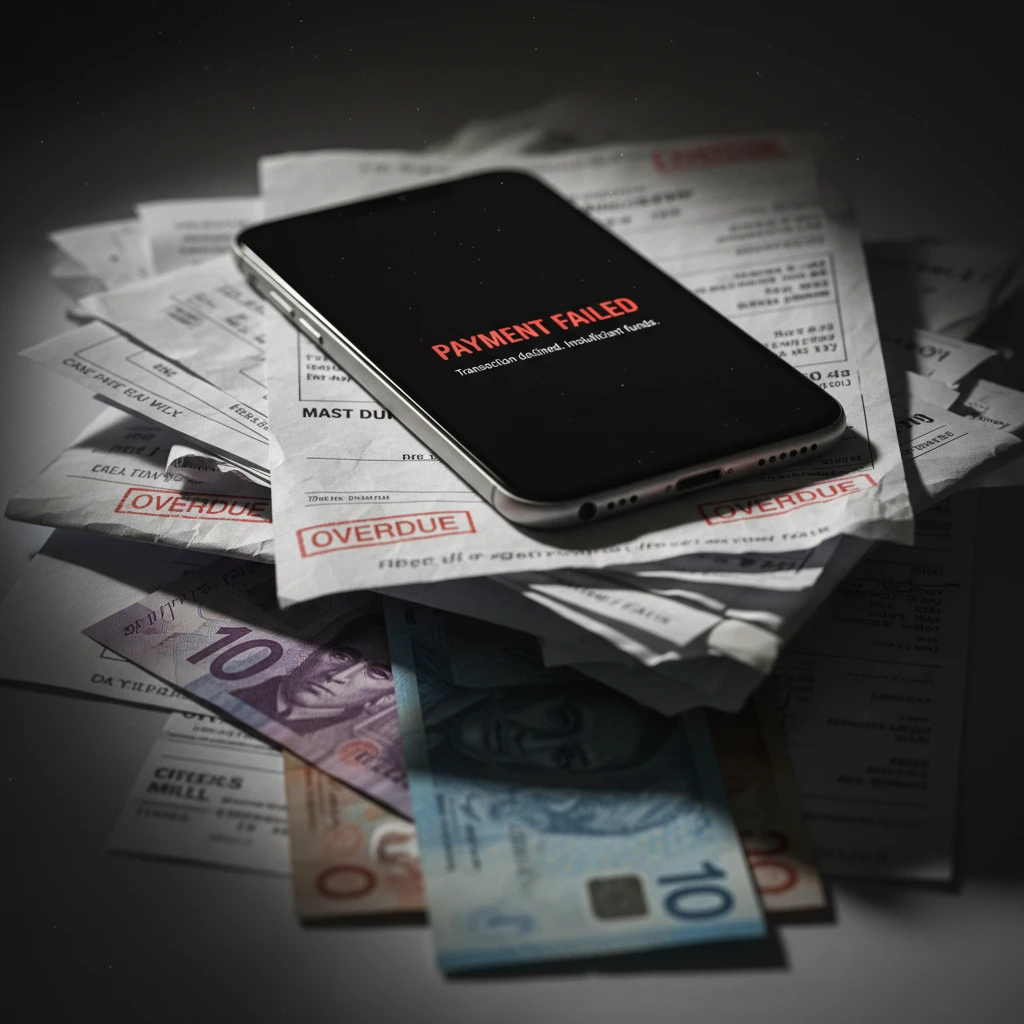
When a consumer is juggling accounts across multiple platforms—Afterpay, Zip, Laybuy, Klarna—missing a payment date becomes a statistical probability rather than a possibility. A consumer might have pay cycles that don’t align with the repayment dates, leading to insufficient funds fees from their bank plus the late fees from the BNPL provider.
The Halo Effect of Small Payments
The “debt spiral” is often psychological before it is financial. By breaking a $200 purchase into four payments of $50, the brain perceives the cost as $50. This creates a “halo effect” where the consumer feels they have more disposable income than they actually do. Consequently, they make another purchase, and another.
Suddenly, a consumer who would never spend $1,000 in a single weekend has committed to $250 in weekly repayments for the next two months. If an unexpected expense arises—a flat tyre, a medical bill—the house of cards collapses. The consumer must choose between paying the BNPL providers to avoid fees or paying for essentials.
The Psychological Trap of Impulse Spending
BNPL platforms are not designed merely as payment processors; they are sophisticated marketing engines designed to maximize conversion rates. They utilize specific psychological triggers to bypass the “pain of paying.”
Removing Friction
In behavioral economics, the “pain of paying” is the negative feeling associated with handing over cash or seeing a bank balance drop. BNPL minimizes this pain. The checkout process is often faster than using a credit card, involving just a face scan or a single tap. This frictionless experience decouples the act of consumption from the consequence of payment.
Instant Approval and Dopamine
The “Instant Approval” notification triggers a dopamine release similar to winning a small gamble. It validates the consumer’s status and grants immediate ownership of the item. This instant gratification loop reinforces the behavior, making it harder to resist future impulse buys. The apps often send push notifications reminding users of their “available spend limit,” framing debt capacity as an asset or wealth to be used.

Regulatory Changes: Is BNPL Covered by Credit Laws?
For years, consumer advocates in New Zealand argued that BNPL was a loophole in the Credit Contracts and Consumer Finance Act (CCCFA). Because the providers did not charge interest, they argued they were not “lenders” in the traditional sense. However, the government has moved to close this gap.
The New Regulatory Framework
The New Zealand government has announced regulations to bring BNPL providers under the umbrella of the CCCFA. This is a critical development for anyone struggling with bnpl debt nz. The changes mean:
- Affordability Checks: Providers are now required to conduct more robust affordability checks to ensure that lending the money will not cause the consumer substantial hardship.
- Dispute Resolution: Consumers have clearer pathways to dispute resolution schemes if they believe they have been treated unfairly.
- Hardship Obligations: Perhaps most importantly, BNPL providers legally must have hardship policies in place. If a consumer informs the provider they are struggling, the provider must work with them to restructure the debt, potentially freezing fees or extending repayment terms.
These regulations are designed to stop predatory lending practices where providers issue credit to people who clearly cannot afford to pay it back without sacrificing essentials like food or power.
How to Fix BNPL Debt: Actionable Steps
If you or someone in your whānau is drowning in BNPL repayments, it is vital to act immediately. Ignoring the notifications will only lead to debt collection agencies getting involved, which adds significant stress and further costs.
Step 1: The Hardship Application
Under NZ law, you have the right to apply for hardship. Do not wait for a default.
- Contact the Provider: Email or call the hardship team of the specific BNPL service (Afterpay, Laybuy, Zip, etc.).
- State Your Case: Clearly explain that you are experiencing “unforeseen hardship” (e.g., loss of job, illness, or simply overcommitment).
- Request a Freeze: Ask them to freeze all future late fees and penalties immediately.
- Propose a Plan: Offer a repayment amount you can actually afford, even if it is $5 a week.
Step 2: The Snowball vs. Avalanche Method
Once you have stabilized the situation with hardship applications, you need a strategy to clear the balance.
- Snowball Method: Focus on paying off the smallest balance first while paying minimums on the others. The psychological win of closing an account motivates you to keep going.
- Avalanche Method: Focus on the debt with the highest penalties or fees.
For most people dealing with BNPL, the Snowball Method is superior because the balances are usually small enough to clear quickly, reducing the number of active repayment schedules you have to mentally track.

Step 3: Seek Professional Help
New Zealand has excellent free resources for financial capability. Services like MoneyTalks (a free financial helpline) can connect you with financial mentors who can advocate on your behalf with lenders. They can often negotiate better terms than you can on your own.
People Also Ask
Does BNPL debt affect my credit score in NZ?
Yes, it can. While some BNPL providers do not perform a “hard” credit check upon application, they almost all report defaults to credit reporting agencies like Centrix, Equifax, and Illion. If you miss payments and the debt is passed to a collection agency, this will appear on your credit file and can prevent you from getting a mortgage, car loan, or even a utility contract for up to five years.
Can I go to jail for not paying Afterpay or Laybuy?
No, you cannot go to prison for debt in New Zealand. Debt is a civil matter, not a criminal one. However, creditors can take you to court to enforce payment, which can result in attachment orders (money taken directly from your wages) or baliffs seizing property to sell to cover the debt.
How do I apply for financial hardship with BNPL providers?
Every BNPL provider operating in NZ is required to have a hardship policy. You should look for the “Hardship” or “Financial Assistance” link in the app’s settings or on their website footer. You will typically need to fill out a form detailing your income, expenses, and why you cannot pay. Once submitted, enforcement action should pause while they assess your application.
Is Buy Now Pay Later regulated in New Zealand?
Yes, the government has moved to bring BNPL under the Credit Contracts and Consumer Finance Act (CCCFA). This means providers must now comply with responsible lending obligations, including verifying that a consumer can afford the repayments without suffering substantial hardship.
What happens if I just delete the app and don’t pay?
Deleting the app does not delete the debt. The provider will continue to attempt to charge your linked card. Eventually, the debt will be sold to a debt collection agency. The collection agency will add their own fees to the total, and the default will be listed on your credit report, severely damaging your financial future.
How can I block BNPL apps from my phone?
If you are struggling with impulse spending, you can use app blockers or “digital wellbeing” settings on your phone to restrict access to these apps. Furthermore, some NZ banks allow you to block gambling and merchant transactions for specific categories via their mobile banking apps. You can also contact the BNPL provider and request they permanently close your account and ban your details from reopening one.