Private lenders in NZ for bad credit are non-bank financial institutions that offer funding to borrowers with poor credit histories. While legitimate registered providers exist, this sector carries significant risks. Borrowers must verify that lenders are listed on the Financial Service Providers Register (FSPR) and adhere to the Credit Contracts and Consumer Finance Act (CCCFA) to avoid predatory interest rates exceeding the legal cap.
Finding traditional financing when you have a poor credit score can feel like navigating a minefield. For many New Zealanders, the search for private lenders nz bad credit is driven by urgent financial necessity. However, the private lending market is a spectrum that ranges from legitimate, law-abiding finance companies to illegal, predatory loan sharks who exploit financial vulnerability.
It is crucial to understand that having bad credit does not strip you of your consumer rights. New Zealand has robust laws designed to protect borrowers from unconscionable conduct, but these protections only work if you know how to identify them. This guide serves as a comprehensive resource for navigating the private lending landscape safely, understanding the costs involved, and identifying the warning signs of predatory practices.

Defining Private Lenders: Regulated vs. Loan Sharks
When discussing private lending in New Zealand, it is essential to distinguish between the two primary categories of non-bank lenders. The term “private lender” is often used loosely, but legally and functionally, the difference between a registered financial service provider and a loan shark is vast.
Legitimate Non-Bank Lenders (Tier 2 and Tier 3)
Legitimate private lenders are registered businesses that operate outside of the traditional banking system (Tier 1). These companies often specialize in high-risk loans, including those for people with bad credit. Because they take on higher risks than banks, they charge higher interest rates to offset potential losses.
However, these entities are strictly regulated. They must:
- Be registered on the Financial Service Providers Register (FSPR).
- Belong to a dispute resolution scheme (such as FSCL or IFSO).
- Comply with the Credit Contracts and Consumer Finance Act (CCCFA).
- Perform affordability assessments before lending money.
Unregulated “Loan Sharks”
In contrast, a loan shark is an unauthorized lender who operates illegally. They often target the “private lenders nz bad credit” market because they know these borrowers have few options. Loan sharks typically:
- Do not provide written contracts.
- Charge interest rates far exceeding legal limits.
- Use intimidation or harassment to collect debts.
- Operate on social media or via word-of-mouth without a physical office or website.
The Truth Behind “No Credit Check” Loans
One of the most alluring marketing phrases for desperate borrowers is “No Credit Check.” While this promises easy access to cash, it is almost always a precursor to predatory terms. In the context of New Zealand law, a true “no credit check” loan is difficult to provide legally because the CCCFA requires lenders to exercise “responsible lending duties.”
Why “No Credit Check” is a Red Flag
Responsible lending laws mandate that a lender must be satisfied that the borrower can make repayments without suffering substantial hardship. To determine this, a lender generally must review the borrower’s financial history. If a private lender advertises that they do not check credit or income, they are likely ignoring legal requirements.
Furthermore, if a lender is not checking your creditworthiness, they are securing their investment in other, often aggressive ways:
- Extremely High Interest: They assume you will default, so they front-load the cost.
- Asset Seizure: They may require collateral (like a vehicle) worth far more than the loan value.
- Wage Garnishment: They may use aggressive legal tactics to garnish wages immediately upon a missed payment.
New Zealand’s Legal Interest Rate Caps Explained
To combat predatory lending, the New Zealand government introduced significant changes to the Credit Contracts and Consumer Finance Act (CCCFA), specifically targeting high-cost loans. If you are seeking a private lender due to bad credit, you are likely entering the territory of “high-cost consumer credit contracts.” It is vital to know the mathematical limits the law places on these loans.
The 0.8% Daily Interest Cap
For high-cost loans, lenders cannot charge more than 0.8% interest per day. While this sounds small, it compounds to a massive annual rate. However, this cap prevents the astronomical rates (sometimes exceeding 500% or 800% p.a.) that were previously seen in the unregulated market.
The 100% Total Cost of Credit Cap
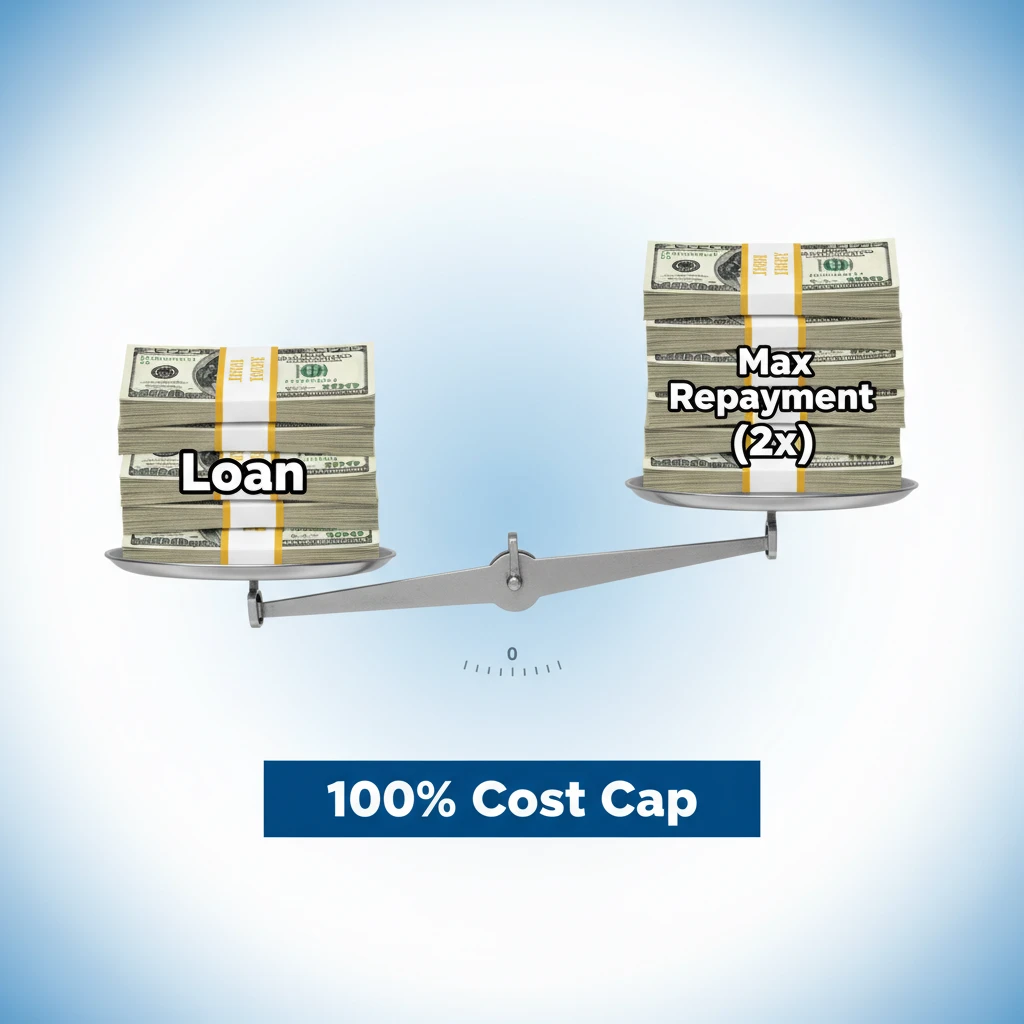
Perhaps the most important protection for borrowers is the “total cost of credit” cap. The law states that you should never have to pay back more than twice the amount you borrowed.
Example: If you borrow $500, the maximum amount you can be made to pay back—including the original principal, all interest, and all fees—is $1,000. If a private lender tries to charge you $1,200 total on a $500 loan, they are breaking the law.
Compound Interest Prohibition
Lenders providing high-cost consumer credit contracts are prohibited from charging compound interest. This means they cannot charge interest on top of unpaid interest. This prevents the debt spiral where a small loan balloons into an unmanageable sum simply because a few payments were missed.
How to Check the Financial Service Providers Register (FSPR)
Before accepting money from any private source, you must verify their legitimacy. In New Zealand, anyone in the business of providing credit must be registered. This is your primary safety filter.
Step-by-Step Verification Process
- Ask for the Legal Name: Do not just accept a brand name or a first name (e.g., “Dave’s Loans”). Ask for the registered company name.
- Visit the FSPR Website: Go to the official Companies Office FSPR website.
- Search the Register: Input the company name or their FSP number.
- Verify Dispute Resolution: A legitimate search result will show which Dispute Resolution Scheme (DRS) the lender belongs to. This is critical. If they are not part of a DRS, you have no third-party recourse if they treat you unfairly.
If a lender refuses to give you their FSP number or cannot be found on the register, walk away immediately. They are operating illegally, and you will have no protection under the standard consumer frameworks.
Red Flags of Predatory Private Lenders
When you are financially vulnerable, it is easy to overlook warning signs in the hope of securing funds. However, spotting these red flags early can save you from financial ruin.
1. Solicitation via Social Media
Legitimate finance companies generally do not cold-message people on Facebook, Instagram, or TikTok offering cash. Predatory lenders often prowl community buy/sell pages looking for people expressing financial distress.
2. Requesting Bank Login Details
Never, under any circumstances, give a lender your internet banking password. Some predatory lenders ask for this to “check your income” or to set up automatic transfers. This is a severe security breach and violates the terms of service with your bank.
3. Blank Contracts
You should never sign a document that has blank spaces where numbers (interest rates, repayment dates, fees) should be. A common tactic among loan sharks is to get a signature on a blank form and fill in aggressive terms later.
4. Fees for “Processing” Before the Loan
If a private lender asks you to pay a fee upfront (e.g., $50 for “admin” or “processing”) before they release the loan funds, this is a scam. Legitimate establishment fees are added to the loan balance or deducted from the amount paid out, never requested in cash beforehand.

Safer Alternatives to Private Lending
If you are searching for “private lenders nz bad credit,” you likely feel you have exhausted all other options. However, there are alternatives designed specifically for hardship that are safer than high-interest private loans.
Work and Income (WINZ) Advances
If you are on a benefit or have a low income, you may qualify for a Recoverable Assistance Payment or an Advance Payment of Benefit. These are loans from the government that must be paid back, but they do not charge interest. This is always a cheaper option than a private lender.
No Interest Loan Scheme (NILS)
organisations like Good Shepherd NZ offer No Interest Loans (NILS) for essential goods and services (like car repairs, medical equipment, or whiteware). These loans allow you to borrow up to a certain limit without paying a cent in interest, provided you meet the criteria.
KiwiSaver Hardship Withdrawal
While this impacts your retirement savings, withdrawing from your KiwiSaver for “significant financial hardship” is preferable to taking on high-interest debt that you cannot service. You must apply through your KiwiSaver provider and prove you cannot meet minimum living expenses.
Debt Consolidation via Ethical Lenders
Some credit unions and community finance organizations offer debt consolidation loans specifically for people trying to escape predatory debt. They operate as non-profits or cooperatives, meaning their goal is to help you get out of debt, not keep you in it.
Conclusion
Navigating the world of private lenders in New Zealand with bad credit requires vigilance. The difference between a regulated second-tier lender and a predatory loan shark is the difference between a manageable financial tool and a debt trap. Always check the FSPR, calculate the total cost of credit to ensure it doesn’t exceed the 100% cap, and never agree to a loan that doesn’t feel right. Your financial safety is worth more than quick cash.
Can private lenders in NZ charge whatever interest rate they want?
No. Under the Credit Contracts and Consumer Finance Act (CCCFA), high-cost consumer credit contracts are capped at 0.8% interest per day. Additionally, the total cost of credit (interest plus fees) cannot exceed 100% of the original loan amount.
Is it illegal to lend money without a license in NZ?
Yes. Anyone in the business of providing consumer credit must be registered on the Financial Service Providers Register (FSPR). Lending as a business without registration is illegal, and such lenders are often referred to as loan sharks.
What happens if I can’t pay back a private lender?
If the lender is legitimate, they may charge default fees (which must be reasonable) and eventually send the debt to a collection agency. They can also repossess secured assets. If the lender is a loan shark, they may use illegal harassment tactics, which should be reported to the Police or the Commerce Commission.
Are “payday loans” banned in New Zealand?
Payday loans are not explicitly banned, but they are heavily regulated under the high-cost credit provisions of the CCCFA. The strict interest caps and affordability assessments have made it much harder for traditional payday lenders to operate, reducing their presence in the market.
How do I report a loan shark in NZ?
You can report predatory lending practices to the Commerce Commission via their website or by calling 0800 943 600. If you feel physically threatened or unsafe, you should contact the New Zealand Police immediately.
Can a private lender take my house?
Only if the loan was secured against your property (a mortgage or caveat). Unsecured personal loans do not give the lender the right to seize your home. However, if you default on a secured loan, the lender can initiate legal proceedings to recover their money through the sale of the asset.